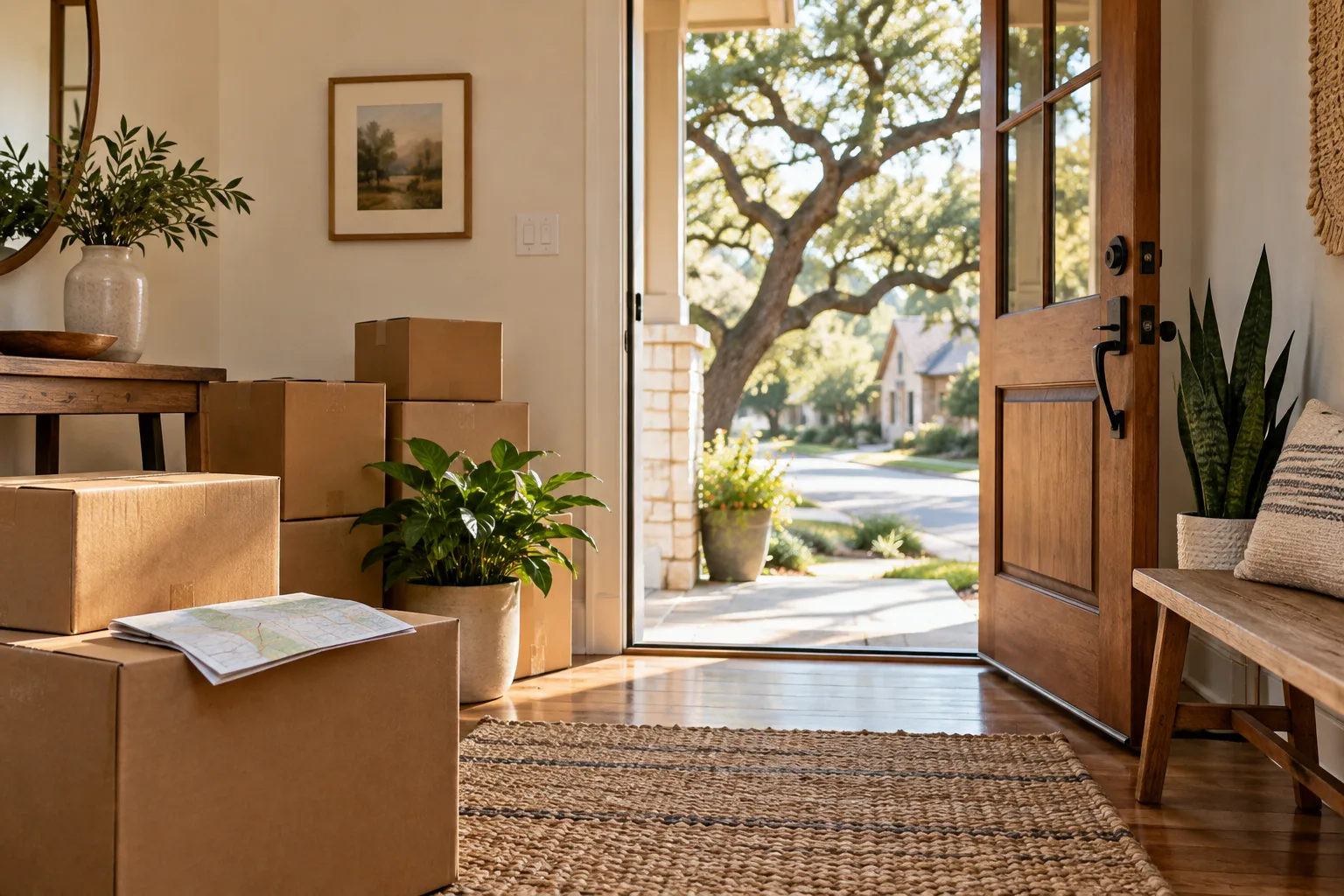
Remote tours are useful, but they cannot replace address-level research, independent inspections, and a financing plan. Organize the evidence before a short visit becomes a rushed decision.
Build the brief before touring
List the daily routes, home requirements, likely move date, and full monthly budget before comparing properties. A video tour can show layout and finishes; it may not reveal street noise, travel time, drainage, or the condition of hidden systems. Ask for measurements, disclosures, association documents, and a live walkthrough focused on the questions you cannot answer online.
Verify schools by address with the district, and check property-tax and jurisdiction information through the relevant public records. Neighborhood names and ZIP codes are too broad for those decisions.
Keep independent checks in the plan
The Texas Real Estate Commission explains the role of licensed inspectors and the limits of a casual walkthrough. Arrange an appropriate independent inspection and ask qualified specialists to evaluate concerns outside a general inspection's scope. Review the contract and deadlines with your agent; seek legal advice when a situation requires it.
For financing, compare written Loan Estimates on the same assumptions. The Consumer Financial Protection Bureau describes the information to check before closing, including insurance and cash needed at closing.
Coordinate the trip and closing
If you can visit only once, use the trip to compare a short list and test the actual neighborhood routes. Keep a dated file of listing status, disclosures, estimates, inspection findings, and unresolved questions. Confirm signing, funds, insurance, and move-in logistics with the professionals responsible for each step.