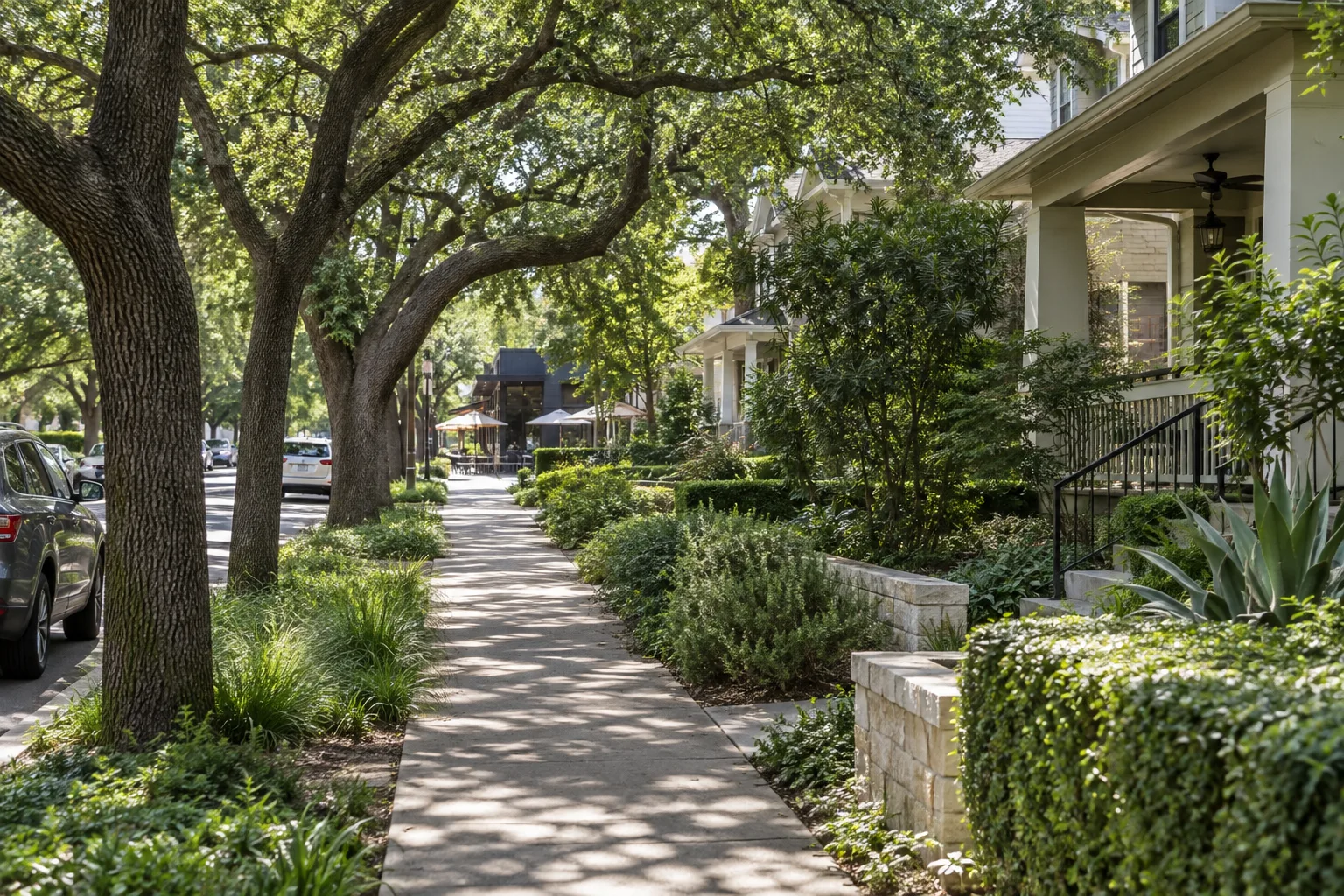
An area can be new to you without being an investment opportunity. Start with the property, public records, current comparables, and your own daily routes.
Replace the label with a shortlist
'Hidden gem' and 'emerging luxury pocket' are marketing labels, not market measurements. If an area interests you, define the home type, budget, and routine you are looking for. Compare a few actual listings and recently closed, genuinely comparable sales rather than projecting growth from a neighborhood story.
Visit the streets at different times. Test travel to the places you use and note construction, traffic, sidewalk conditions, and the mix of homes that could affect your everyday fit.
Check the exact parcel
Public maps can help identify jurisdiction, zoning, flood information, and other property context. Austin's Property Profile and FloodPro are useful starting points for addresses within the relevant city jurisdiction, but records and maps have limits. Obtain the survey, seller documents, and professional advice for a specific concern.
School assignment, insurance, association rules, and development potential are also address-specific. Verify each with the responsible organization before assigning a premium to a listing.
Keep the financial conclusion separate
A neighborhood you enjoy may be a good personal fit without being a superior investment. Ask for a dated analysis with source, sample size, and comparable-property adjustments before making a price or resale claim.