Beyond price per square foot, discerning buyers find lasting value in Austin’s luxury enclaves by weighing scarcity, connectivity, and lifestyle anchors—factors that often surface after move-in and over years of ownership.
Scarcity Shapes Value More Than Square Footage Alone
When guiding clients through neighborhoods like West Lake Hills, Rollingwood, and Rob Roy, we consistently see that scarcity—not just the size or finishes of a home—plays a pivotal role in long-term value. These areas have limited inventory due to large lot sizes, mature trees, and zoning that restricts density. Buyers often notice on a second tour that the feeling of privacy and openness is something they can’t replicate in newer developments.
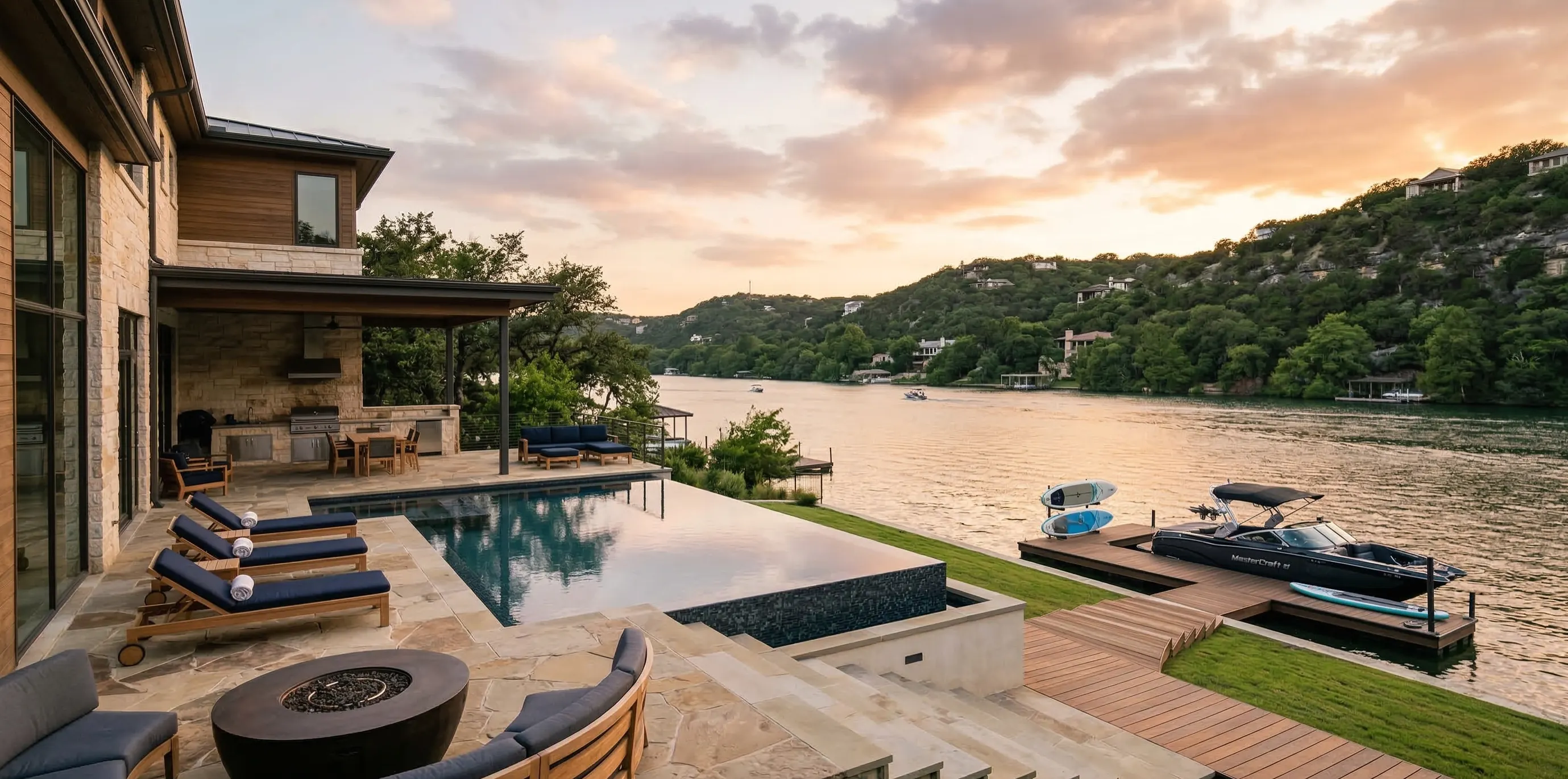
For example, in Barton Creek and Spanish Oaks, gated communities with expansive Hill Country views and golf amenities offer a combination of exclusivity and lifestyle durability that outpaces many similarly priced properties in less established areas. The scarcity of waterfront lots on Lake Austin also factors heavily into value, where a dock’s orientation and no-wake zones become critical considerations beyond the immediate waterfront view.
We usually tell clients that understanding scarcity means looking beyond the immediate features and thinking about what the neighborhood will offer in 10 or 20 years. Neighborhoods like Davenport Ranch and Rob Roy may share Eanes ISD’s reputation, but their day-to-day living experience and land availability differ substantially, influencing how value holds over time.
Location Anchors Lifestyle and Commute Convenience
Location in Austin’s luxury market is about more than proximity to downtown; it’s about how daily rhythms and lifestyle conveniences shape ownership satisfaction and value retention. Tarrytown and Pemberton Heights, for instance, appeal to buyers who prioritize legacy architecture and access to Mopac for straightforward commutes. These neighborhoods offer a blend of established charm and centrality that often becomes more appreciated after move-in, especially as traffic patterns on Loop 360 and Bee Cave Road fluctuate.
By contrast, West Lake Hills and Rollingwood provide a quieter, more Hill Country-oriented lifestyle but require different tradeoffs in commute time. Buyers often realize on a second visit that the ease of reaching lifestyle anchors like Austin Country Club or downtown’s restaurant corridor can influence how often they truly enjoy their home and neighborhood amenities.
Henriett often emphasizes to relocating clients that the better question is how location supports their daily living—not just the weekend. For luxury condo buyers downtown, factors like tower identity, HOA structure, and walkability to Lady Bird Lake come into sharper focus after settling in, shaping long-term satisfaction and resale appeal.
Lifestyle Durability: Beyond Amenities, Toward Timeless Fit
Luxury buyers sometimes miss how lifestyle durability—the neighborhood’s ability to support evolving needs and preferences—affects value over time. In gated enclaves like Spanish Oaks or Barton Creek, the combination of privacy, golf, and large lots offers a lifestyle that adapts well to growing families or downsizing empty nesters alike. This durability is less about the home’s finishes and more about how the community’s character endures.
For waterfront properties on Lake Austin, the decision rarely hinges on the view alone. Dock setup, lot orientation relative to prevailing winds, and long-term scarcity of usable waterfront parcels weigh heavily in sustaining value. We see clients revisit these details during subsequent tours and realize their importance only when imagining daily life on the water.
In neighborhoods like Davenport Ranch and Rob Roy, the blend of Eanes ISD schooling and access to green spaces offers a lifestyle anchor that often becomes a deciding factor. Jason often reminds buyers that lifestyle durability is a subtle but vital component of investment—it’s about how the neighborhood continues to feel like home through life’s transitions.
How Buyers Usually Make the Real Decision
From our experience, high-end buyers often start with price and aesthetics but find the real decision crystallizes around these enduring qualities: scarcity, location, and lifestyle fit. On a second or third tour, clients notice nuances like the ease of access to Loop 360 from Rollingwood compared to West Lake Hills, or how Pemberton Heights’ tree-lined streets contribute to a sense of permanence and community.
We also observe that buyers appreciate when they can envision how their family’s needs will evolve within the neighborhood. For example, a client considering Barton Creek might initially focus on golf amenities but later prioritize privacy and lot size as their priorities shift. These layered insights emerge through conversations and visits, not from a quick checklist.
Jason often shares that understanding financing and neighborhood fit simultaneously helps clients approach value with confidence. It’s rarely a single feature but a combination of factors that leads to a meaningful investment decision in Austin’s luxury market.