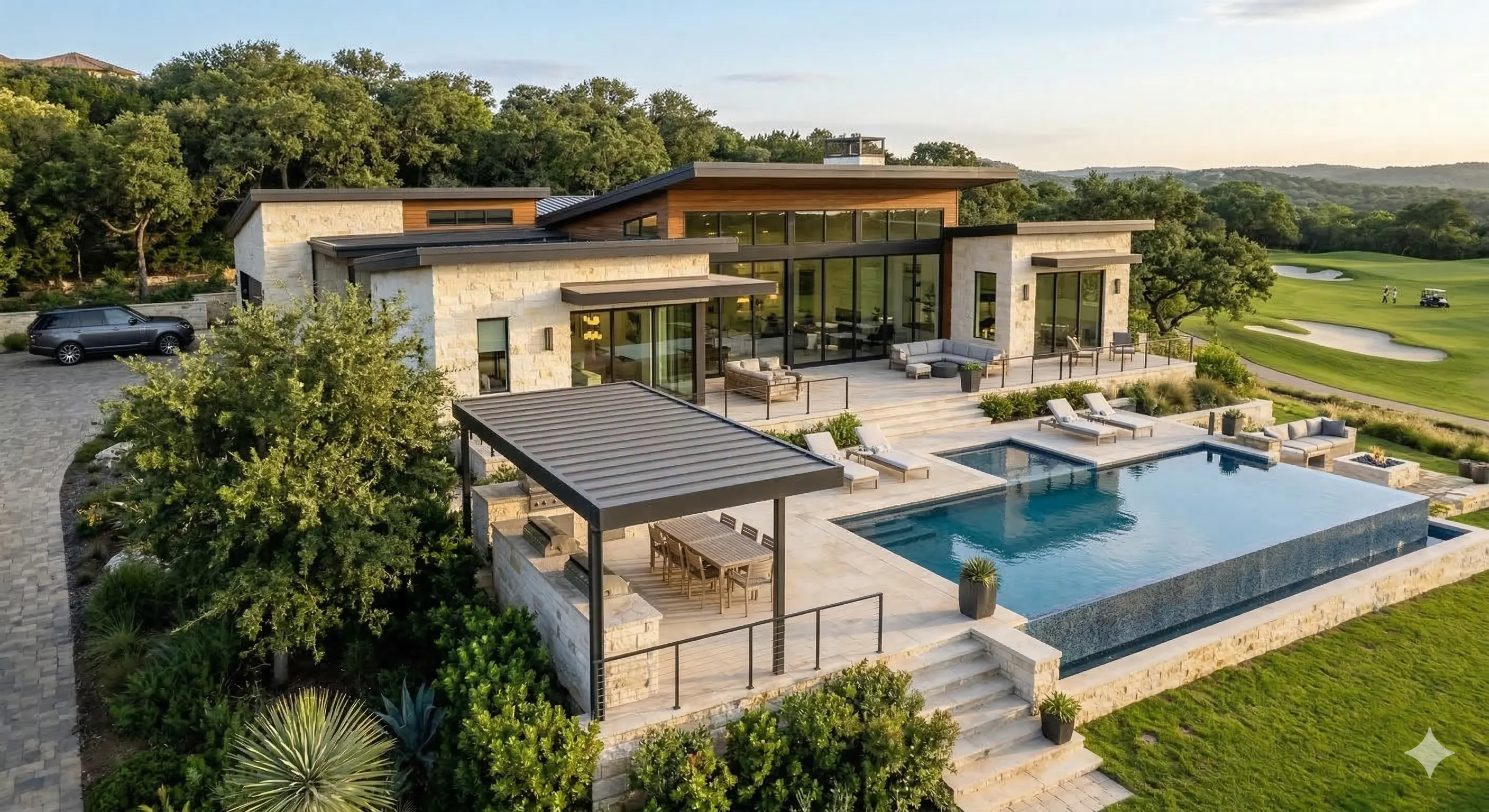
For privacy-focused buyers in Austin’s luxury real estate market, neighborhood design—including gated access, road patterns, and discreet entry points—plays a crucial role in safety and comfort. We explore how these elements shape the experience in communities such as Barton Creek, Rollingwood, and Davenport Ranch.
Gated Access: The First Line of Privacy in Austin’s Affluent Enclaves
Jason and Henriett with Hastings & Novak Estates Group often guide clients through the subtle but critical differences in neighborhood access, especially for buyers prioritizing privacy and discretion. Gated communities like Barton Creek and Spanish Oaks offer controlled entry points that limit traffic to residents and approved guests only, which naturally reduces exposure and enhances security. These gates aren’t just physical barriers—they set a tone of exclusivity and calm that high-profile individuals find reassuring.
We usually tell clients that the quality of gate management matters as much as the gate itself. For example, some West Lake Hills neighborhoods have automated access with on-site security personnel, while others rely on remote monitoring combined with resident-controlled entry systems. This blend of technology and human presence creates a layered approach that balances convenience with effective screening. On a second tour, privacy-focused buyers often notice how discreet and unobtrusive these entrances are, which helps maintain a low profile without compromising safety.
Neighborhood Layouts That Foster Discretion and Limit Exposure
The way a neighborhood is designed impacts privacy far beyond gates. Rollingwood and Davenport Ranch, for instance, feature winding roads and cul-de-sacs that naturally discourage through-traffic and casual visitors. This layout creates pockets of quiet, shielded from the bustle of main arteries like Bee Cave Road or Mopac. Buyers often remark that these subtle design choices feel like a buffer, providing a sense of retreat even when the city is just minutes away.
Henriett often points out that high-profile clients appreciate neighborhoods where homes are set back from the street with mature landscaping, such as in Rob Roy or Pemberton Heights. This layering of natural privacy elements—trees, elevation changes, and lot orientation—works hand in hand with architectural discretion. After move-in, clients frequently tell us how much they value this ‘invisible’ privacy that isn’t obvious from the outside but profoundly affects daily comfort.
Access Patterns and Road Connectivity: Balancing Convenience with Seclusion
Privacy-minded buyers often ask about traffic flow and access routes. In Austin, the difference between a neighborhood accessed via Loop 360 versus one near Redbud Trail can be significant in terms of who passes through and how often. For example, Spanish Oaks benefits from limited entry points off Bee Cave Road, which reduces casual traffic and enhances a sense of exclusivity. Conversely, Tarrytown’s proximity to Mopac and downtown offers convenience but requires a more deliberate approach to privacy through gate systems and home siting.
Jason’s Texas roots give him a grounded perspective on how these access patterns influence daily life. He notes that many clients find gated neighborhoods near major arteries like Loop 360 provide the best of both worlds: quick commutes paired with a secure, discreet home base. We see that the better question for privacy isn’t just how many gates exist, but how the neighborhood’s road network channels visitors and residents alike.
Discretion Beyond the Gate: Community Culture and Neighbor Awareness
Privacy for high-profile individuals extends beyond physical barriers to the culture and expectations within the neighborhood. Communities like West Lake Hills and Barton Creek often foster a quiet respect for discretion, where neighbors value privacy and maintain a low profile. This cultural element can be as important as gates or landscaping, as it shapes how residents interact and protect one another’s space.
Henriett often reminds clients that the ‘soft’ aspects of privacy—such as neighbor discretion and community norms—are what make a neighborhood truly safe for prominent residents. In Spanish Oaks, for example, this culture is reinforced by the country club lifestyle, where social connections are close-knit but respectful of personal boundaries. Buyers typically notice this layer of privacy after spending time in the neighborhood, when the quiet confidence of the community becomes palpable.