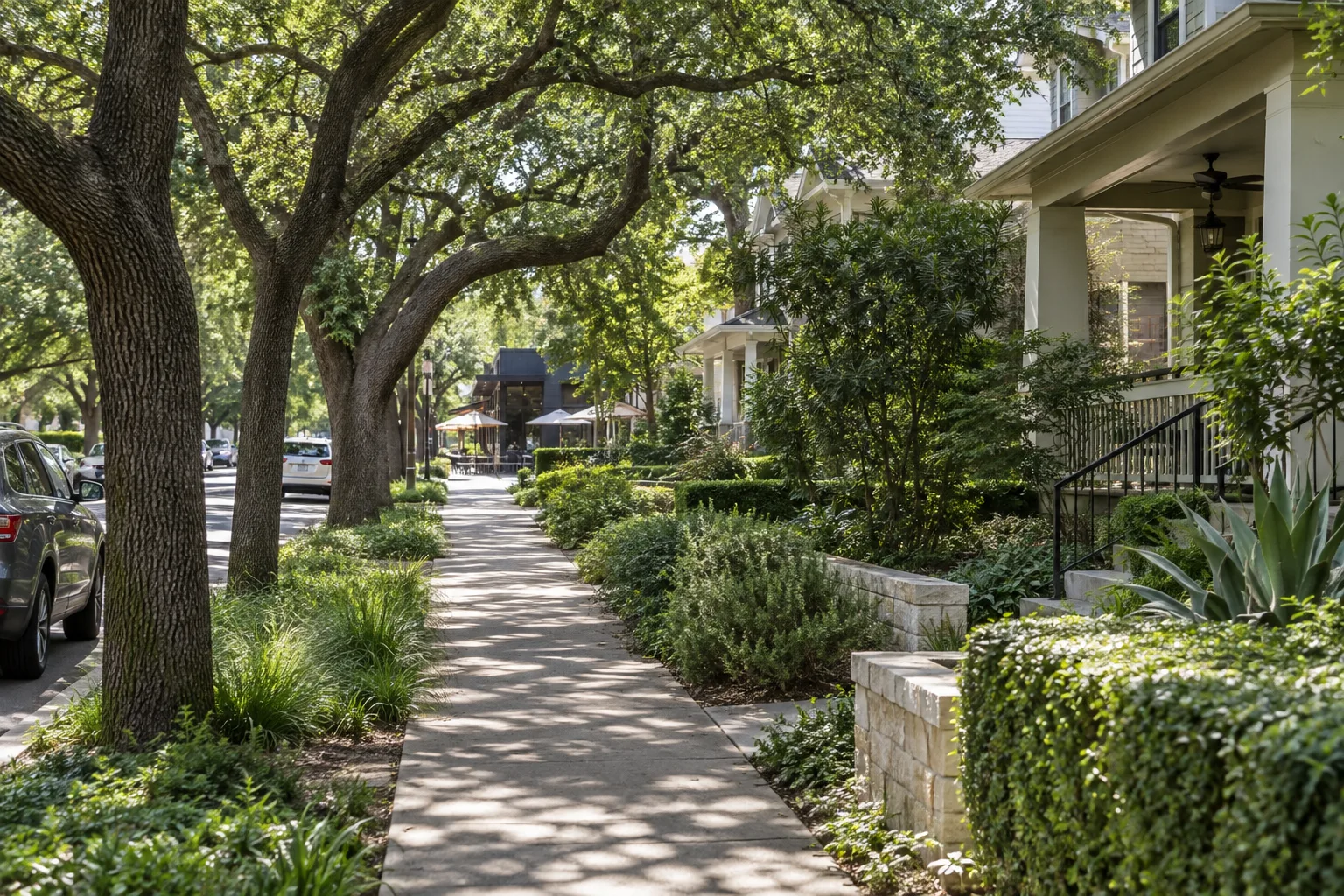
Walkability and privacy can coexist, but both vary block by block. Test the actual trip and the actual home's exposure rather than relying on a neighborhood label.
Walk the route you expect to use
Choose two or three destinations that matter to your routine, then walk from the candidate home. Note whether the route has continuous sidewalks, comfortable crossings, shade, lighting, and the kind of street activity you prefer. Distance on a map does not capture all of those details.
Austin's Sidewalks, Crossings and Shared Streets Plan is useful context for network priorities, but an on-the-ground visit is still needed to assess a particular route today.
Define what privacy means for this household
Some buyers want quiet outdoor space; others prioritize limited visibility from the street or easy entry for deliveries and guests. Stand in the rooms and yard you would use and look at neighboring windows, traffic patterns, and the practical effect of existing landscaping.
If the solution would require a fence, planting, or structural change, verify property lines, association rules, and local requirements before assuming the work is permitted.
Compare homes consistently
Score each address for the routes and privacy features you personally need. A central block may be more walkable but busier; a tucked-away lot may be quieter but more car-dependent. Those are tradeoffs to verify, not a reason to label one whole neighborhood best.